If you’ve searched for a sports psychologist in Denver, CO, you’ve probably found a mix of answers, and maybe a little confusion about who is qualified to do this work. That confusion is understandable. Sport and performance psychology is a broad field, and the people who practice within it hold different credentials, work with different populations, and offer different types of support.
Sport & performance psychology combines evidence-based mental health care with mental performance training for athletes and performers. It’s the field that sits at the intersection of how you think and how you compete. As a sports therapist and Certified Mental Performance Consultant in Denver, CO, I work with athletes on both sides of that intersection every week, and I want to give you a clear, direct answer to what this work actually involves.
This article will walk you through what sport and performance psychology is, who provides it, and what to expect during sessions. It will also cover who this kind of support helps and the misconceptions that keep people from reaching out.
What is Sport & Performance Psychology?
Sport and performance psychology has two main areas of focus, and most practitioners work in one or both. Mental performance skills are the tools that help you compete at your best. This includes imagery, confidence building, focus techniques, communication strategies, and competition routines.
Mental health support addresses the psychological challenges that show up in and around sport. This includes anxiety, depression, disordered eating, sports trauma, and identity concerns tied to your athletic career. Both matter. Your ability to execute under pressure and your overall mental well-being are deeply connected, which is exactly why this field exists.
Why Both Areas Matter
Both matter, and they’re more connected than most people realize. An athlete dealing with untreated performance anxiety often can’t fully access the mental skills training that would otherwise help them, because the anxiety itself is the barrier. Likewise, an athlete working through a mental health concern often benefits from performance-specific tools.
A grounding routine before competition, for example, can work alongside their clinical care rather than replacing it. This is why so many practitioners in this field are dually trained to move fluidly between both sides rather than treating them as separate lanes. You can read more about the role sport psychology plays in athletic performance and how the field of performance psychology is defined more broadly.
Who Actually Provides This Care?
If you’re searching for a sports psychologist in Denver, CO, this is where title accuracy matters, and it’s worth being direct about it. Anyone can call themselves a “mental coach,” but the actual scope of what someone is qualified to do depends entirely on their license and certification, not the title on their website.
- Licensed sports psychologists hold a doctorate in psychology and a psychology license, which allows them to diagnose and treat mental illness under that specific license.
- Sports therapists and licensed professional counselors are trained in clinical mental health counseling and can also address mental health symptoms, often alongside specialized sport-specific training.
- Certified Mental Performance Consultants (CMPCs), credentialed through the Association for Applied Sport Psychology, focus primarily on the performance side: mental skills training rather than diagnosis or clinical treatment.
Some practitioners hold more than one of these credentials at once, which adds to the confusion. It’s worth asking directly what someone is licensed and certified to do rather than assuming based on their job title alone. A quick question about credentials at the start of a consultation can save you from starting work with the wrong type of provider for what you need, whether that’s clinical treatment for a mental health concern or performance-specific skills training.

My Own Credentials
I hold an EdD in Sport Performance Psychology, I’m a Licensed Professional Counselor in the state of Colorado, and I’m an AASP Certified Mental Performance Consultant. That combination means I’m trained to support both the mental health and mental performance side of an athlete’s experience, without claiming the specific title of psychologist.
Whether you’re searching for a sports psychologist, a sports therapist, or a mental performance consultant in Denver, CO, the important thing is finding a provider whose credentials actually match. That match should reflect the specific kind of support you need.
For a deeper look at how this field supports performance, Cune University has a solid overview of the role of sports psychology in athletic performance, and the American Psychological Association outlines the field further in its guide to performance psychology.
What Does This Work Actually Look Like?
A lot of athletes come in expecting something vague, like a Ted Lasso style motivational pep talk or a generic worksheet. That’s not what a sports psychologist in Denver, CO does. Sport and performance psychology is built around specific, teachable mental skills, the same way strength training or footwork drills require technical training and repetition. Instead of talking about your mindset in the abstract, you’re practicing tools you can use the next time you step onto the field, court, or track.
In practical terms, sessions teach specific, learnable skills. Here’s what mental performance consulting sessions look like:
- Imagery and visualization to mentally rehearse performance and prepare for competition
- Confidence and self-talk work to quiet the inner critic and build a supportive internal dialogue
- Team communication and dynamics to strengthen how athletes work with teammates and coaches
- Performance and competition anxiety management to turn nervous energy into focused execution
- Goal setting that goes beyond writing down outcomes and builds an actual roadmap
If you are seeking sports counseling, sessions will also directly address clinical mental health concerns that show up in athletic populations, including depression, anxiety, disordered eating, and sports trauma, which can look like reliving an injury or feeling scared to return to play. This is exactly why sport and performance psychology as a field includes clinically trained providers, not just performance coaches, a distinction Faulkner University breaks down well.
How Do Sessions Work?
Whether you’re working with a sports psychologist in Denver, CO or elsewhere, sessions can happen either in person at an office space, the training environment of the athlete or performer, or virtually. The format feels similar to talk therapy. It’s a confidential, conversational space, not a lecture. You’re not sitting through a presentation. You’re working through the mental barriers you experience in competition, with someone trained to help you build skills and process what’s underneath them. The specific approach is always personalized.
Depending on what you need, sessions might draw from Cognitive Behavioral Therapy, Acceptance and Commitment Therapy, Internal Family Systems, psychodynamic approaches, or somatic techniques. There’s no single formula because no two athletes need the exact same thing. Team sessions work a little differently from individual sessions. Instead of focusing on one athlete’s internal experience, we focus on group communication, role clarity, conflict resolution and the dynamics between athletes and coaching staff.
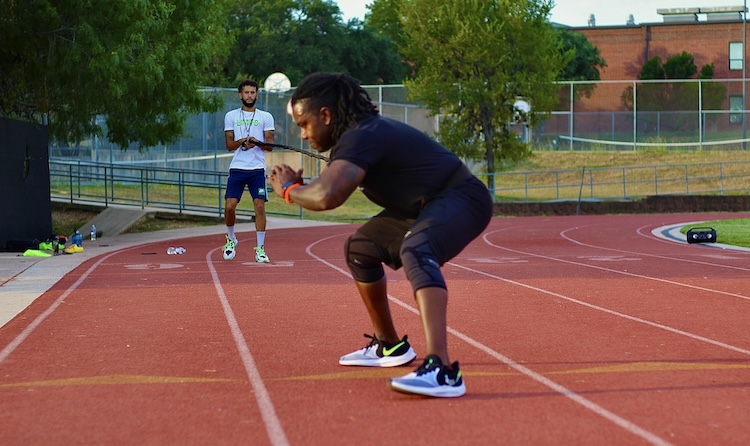
How Sport & Performance Psychology Helps Athletes
The specific concerns that bring athletes to a sports psychologist in Denver, CO vary widely but they tend to fall into a handful of common categories. Here’s a direct look at how sessions help with each one.
Returning to Sport After Injury or Trauma
Injury recovery isn’t just physical. Imagery helps athletes mentally rehearse their return to play before they’re physically ready for it. Sessions also help process the traumatic experience of the injury itself, not just the rehab protocol, so athletes can prepare themselves mentally before stepping back onto the field or court.
Building Confidence and Self-Esteem
Real confidence gets built from preparation and process, not just from winning. Athletes who tie their confidence solely to results tend to feel great after a win and shaken after a loss, which makes performance unpredictable. Confidence work includes addressing self-doubt and negative self-talk, directly and replacing it with something instructional and grounding. Sessions help athletes build a more stable foundation, one rooted in effort, preparation, and evidence of their own growth over time.
Managing Performance Anxiety and Stress
Competition day anxiety is one of the most common reasons athletes reach out. Sessions teach specific tools to manage the physical and mental symptoms of stress, both in the moment and in the buildup to competition. This can include breathing techniques, grounding exercises, and pre-competition routines designed to create a sense of control before the pressure sets in. The goal isn’t to eliminate nerves entirely, since some activation can improve performance, but to keep anxiety from tipping into something that gets in the way.
Strengthening Team Dynamics
This includes athlete-to-athlete relationships and athlete-to-coach communication. Teams that communicate well and hold each other accountable tend to perform more consistently under pressure. Sessions can address specific conflicts within a roster, help clarify roles that have become a source of tension, or simply give a team the tools to communicate more directly instead of letting frustration build beneath the surface.
Working Through Perfectionism and Outside Expectations
Parental pressure and self-imposed expectations can quietly erode an athlete’s relationship with their sport. Sessions help athletes separate their own values from the expectations placed on them, so they can compete with more freedom. This often means learning to distinguish between healthy high standards and perfectionism that leaves no room for mistakes, since the two get confused easily and require different approaches.
Preventing and Recovering From Burnout
Mental fatigue is a legitimate, trainable concern. It’s not a personal failing, and it’s not something you just push through. Sessions help athletes build sustainable habits and build a balanced athletic identity before burnout takes hold or recover from it if it already has, including finding balance outside of sport and reconnecting with the parts of competing that felt enjoyable before the pressure took over.
Navigating Retirement and Athletic Identity
For many athletes, sport becomes central to their identity. When that ends, whether by choice or circumstance, it can trigger a real identity crisis and stages of grief. Sessions help athletes process that transition and learn how to translate the skills they built in sport, like discipline, focus, and resilience, into their next chapter. American Public University covers more on this in its piece on how sports psychologists help athletes.
Work With a Sports Therapist in Denver, CO
You don’t have to navigate performance anxiety, burnout, or a difficult return from injury on your own. Sports counseling and mental performance consulting can help you build the mental skills to compete with confidence, process what’s been weighing on you, and reconnect with why you love your sport in the first place. Whether you’re facing a specific challenge or simply want to strengthen a mental game that already feels solid, support is available at every level. As a sports therapist and Certified Mental Performance Consultant in Denver, CO, I’m here to help, whether you’re just starting to notice a pattern or have been carrying this for a while.
To start building your mental game, follow these simple steps:
- Schedule your complimentary 15-minute consultation to talk through what you’re navigating.
- Meet with me to begin building a personalized plan, whether that’s individual sports counseling, mental coaching for athletes, or team mental performance workshops.
- Start training your mind the same way you train your body, with tools that help you compete with confidence and stay connected to your sport long term.
You don’t have to figure this out alone. Reach out to Headstrong Mindset today to take the first step toward a stronger mental game.
Other Services at Headstrong Mindset
Sports counseling and mental performance consulting aren’t the only support we offer at my Denver, CO practice. I understand that athletes, coaches, and performers often navigate more than one concern at a time, and I’m here to help with those as well. Other services offered at Headstrong Mindset include mental coaching for athletes, mental coaching for teams, and individual counseling and therapy.
I also provide LGBTQ counseling in Colorado, offering an affirming, trauma-informed space for clients exploring identity alongside their athletic or personal life.
About the Founder
Dr. Brooke Rundle is the founder of Headstrong Mindset, offering sports counseling and mental performance consulting in Denver, CO. A former NCAA Division I All-American and professional volleyball player, she holds an EdD in Sport Performance Psychology, is a Licensed Professional Counselor in Colorado, and is an AASP Certified Mental Performance Consultant. She works with USA Volleyball’s National Team Development Program and NCAA teams across a range of sports, bringing both her clinical training and her own competitive experience into every session. Dr. Rundle lives in Denver with her wife Hannah and their dog, Stevie Budd, and spends her downtime skiing the Rockies, playing guitar, and catching live music at Red Rocks.
References
American Psychological Association. (n.d.). Performance psychology. https://www.apa.org/education-career/guide/subfields/performance
American Public University. (n.d.). How do sports psychologists help athletes? https://www.amu.apus.edu/area-of-study/health-sciences/resources/how-do-sports-psychologists-help-athletes/
Concordia University Nebraska. (n.d.). The role of sports psychology in athletic performance. https://www.cune.edu/news/role-sports-psychology-athletic-performance
Faulkner University. (n.d.). What does a sports psychologist do? Understanding this exciting career field. https://www.faulkner.edu/news/what-does-a-sports-psychologist-do-understanding-this-exciting-career-field/