This is not your typical reading list of sport psychology books. At Headstrong Mindset, I want to start by acknowledging that there are a ton of fantastic books out there on mental toughness, navigating pressure, and overcoming mental obstacles for athletes in sports. The problem is that most of them are written by men about male professional athletes. As a former professional and collegiate athlete who has spent a lifetime competing and working in women’s sports, I don’t find most sport psychology books relatable to my athletic career.
I have always enjoyed reading the books of Hall of Fame level coaches such as John Wooden’s A Lifetime of Observations and Reflections On and Off the Court, Phil Knight’s Shoe Dog and Pete Carroll’s Win Forever . There are also fantastic books by sport psychology giants such as George Mumford’s The Mindful Athlete and Timothy Galloway’s classic The Inner Game of Tennis. I have deep respect for these sports legends. However, the experiences they describe in the books often feel otherworldly to female high school and collegiate athletes or coaches who don’t have access to the same level of resources or privilege.
Therefore I have compiled a list of books that are mostly written by women for everyone. These books seek to support the whole athlete and coach. These are the books I share with my current college and elite athletes and coaches. These are the books I wish I had when I was playing.
*Please note that some of the links on this page are Amazon affiliate links, which means I may earn a small commission if you purchase a book through my link — at no additional cost to you. I only recommend books I have personally read and genuinely believe in.

Uncommon Favor: Basketball, North Philly, My Mother, and the Life Lessons I Learned from All Three
Coach Dawn Staley’s memoir is as much a story about mental toughness, perseverance and values-driven leadership as it is about basketball. The legendary USC head coach and two-time Olympic gold medalist reflects on the core values — discipline, loyalty, community, and faith — that carried her from growing up in North Philadelphia to the pinnacle of the sport. This is a must-read for any athlete or coach who wants to understand how a clear sense of identity and purpose translates into sustained excellence on and off the court.

Wolfpack: How to come together, unleash our power, and change the game.
If you are looking for a fun, engaging and inspiring book to read with your entire team during the season, than look no further than Abby Wambach’s Wolfpack. The two-time Olympic Gold Medalist & FIFA World Cup Champion shares pearls of wisdom about leadership, teamwork, and balancing athletic identity. My favorite quote: “I’ve never scored a goal in my life without getting a pass from someone else.” We all have something to learn from Abby in this feminist athlete call to arms. There is also a version of Wolfpack adapted for young readers.
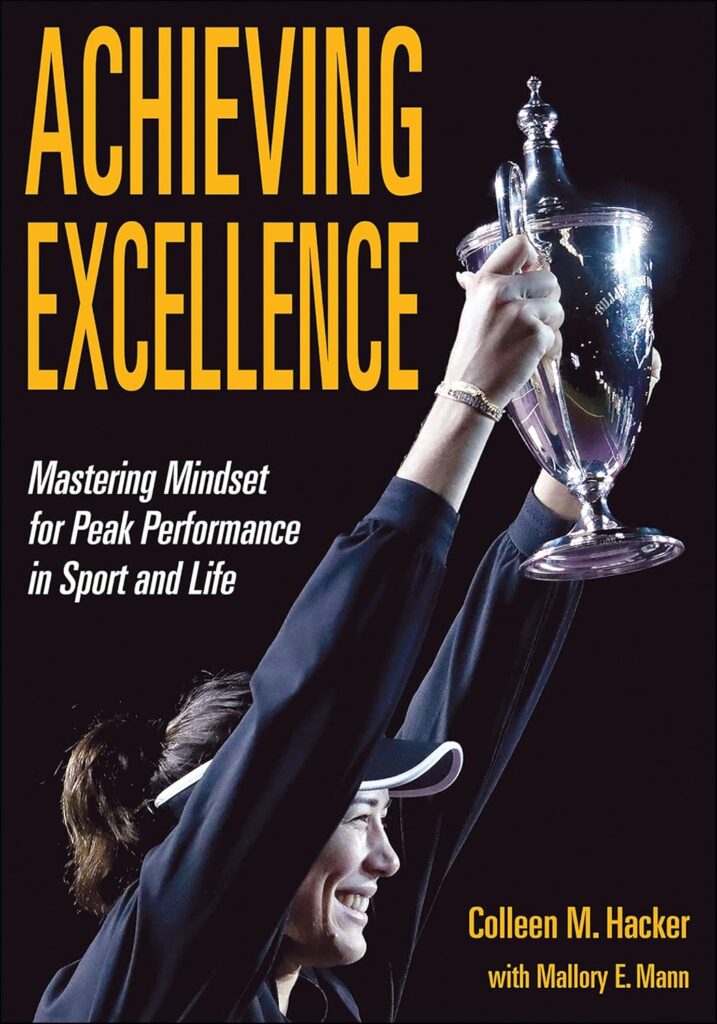
Achieving Excellence: Mastering Mindset for Peak Performance in Sport and Life
This book by Dr. Colleen Hacker and Mallery Mann is my absolutely go-to favorite Sport Psychology book. Dr. Colleen Hacker was the U.S. National Team Mental Skills coach for Team USA when they won 1999 Women’s World Cup. She’s also a 6x member of the Olympic coaching staff. It’s a fantastic read for players, coaches, sport psychologists and mental performance consultants. In her book she identifies self-awareness and self-regulation as two of the most important mental skills that impact athlete performance. If you like learning from Dr. Hacker, I highly recommend listening to her conversation with Julie Foudy on ESPN’s Laughter Permitted podcast.
Dear Coach
Full disclaimer – I am a super fan of Dr. Erdner’s book because I had the great privilege of being mentored by Dr. Erdner throughout my doctorate program and CMPC certification process for the Association for Applied Sport Psychology. I cannot say enough about how the athlete’s vulnerable letters in this book resonated with my personal experience as a former NCAA athlete and collegiate volleyball player. This is required reading for any coach that works with me. This book combines evidence-based research with athletes real life stories about their collegiate athletic experience to address systemic communication issues in college athletics.
In this book, Dr. Erdner asks all the athletes one single question: What do you wish you could have told your coach but, for whatever reason, never did? It’s a must read book for college coaches. The answers will change the way you see your athletes and transform your relationships with them.
Rebound: Train your mind to bounce back from sport injuries
Rebound is the book I wish I had read when I was recovering from wrist surgery and trying to find my way back into the starting lineup of my college volleyball team. In this book Carrie Jackson Cheadle and Cindy Kuzma created a guide to support injured athletes with building the psychological resilience needed to recover from injury and return to sport stronger than before. They walk you through the emotional and mental stages of injury recovery — from the initial shock and grief of being sidelined to rebuilding confidence and trust in your body as you return to competition. What I love most about this book is that it validates the psychological toll that injury takes on athletes, which is so often overlooked in traditional sports medicine and rehabilitation settings. They also have an inspiring podcast for injured athletes called The Injured Athlete Club.
Coaching Athletes to Be Their Best: Motivational Interviewing in Sport
If you are a coach who wants to explore an athlete’s resistance to change and learn how to navigate team conflict, this is the book for you. The authors take this person-centered approach to evaluating intrinsic motivation and apply it directly to athletes in sport. I use motivational interviewing all the time with my athletes and highly recommend this book to coaches and sport psychologists.
Instead of telling athletes what to do and how to do it, motivational interviewing teaches coaches to ask better questions — and then truly listen to the answers. It’s a communication approach rooted in respect, curiosity, and the belief that athletes already have the answers inside them. This book goes beyond coaching… it teaches a philosophy of curiosity and human empathy. It’s particularly valuable for coaches working with athletes who are struggling with motivation, burnout, identity issues, or the transition out of sport. It’s guaranteed to make you a better coach, a better communicator, and honestly, a better human being.
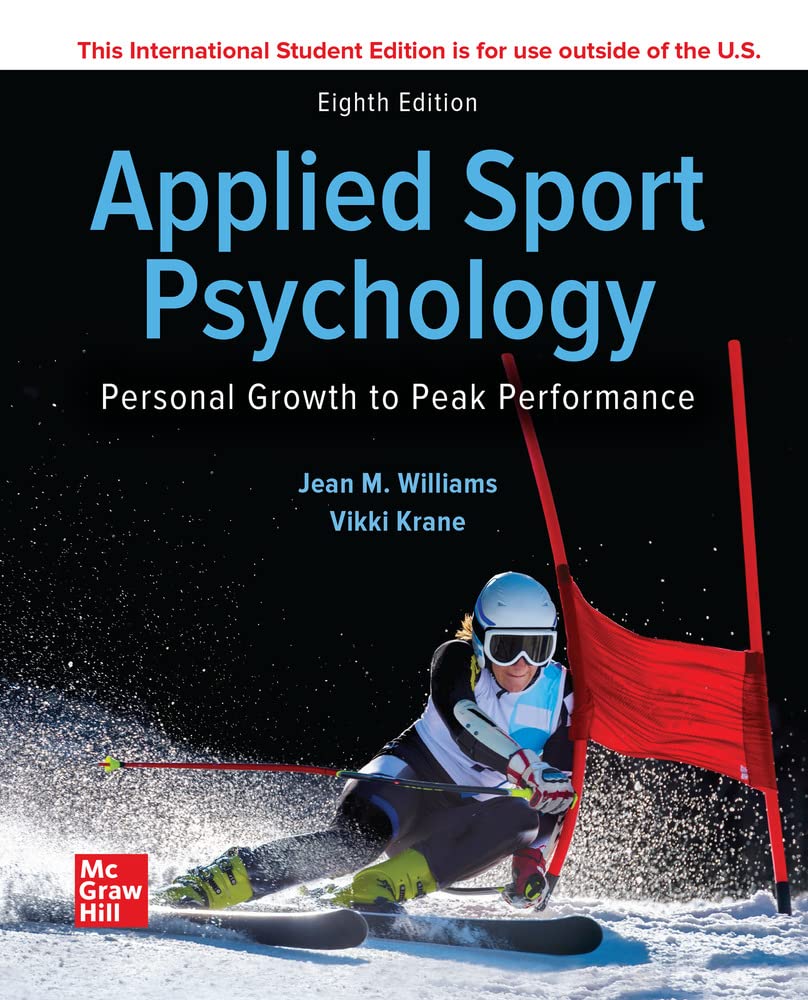
Applied Sport Psychology: Personal Growth to Peak Performance
This is the sport psychology textbook that I return to again and again. I consider this book to be the “bible” of sport psychology techniques. It was required for me in grad school and I find myself continuing to reference the teachings, activities and techniques shared in this book by Dr. Jean Williams and Dr. Vikki Krane. Warning: it’s not a quick and easy read, but it covers a broad variety of topics and performance concerns that athletes and coaches experience, so you can jump to the chapter on the theme you need support around. Dr. Krane is one of my favorite sport psychology authors and researchers. Dr. Krane also published a brilliant research article on Sex, Gender, & Sexuality in Sport that is definitely worth a read.
Dare to Lead: Brave Work. Tough Conversations. Whole Hearts.
This book isn’t exactly a Sport Psychology per se, but the principles in this book are absolutely transferrable to coaches and athletes. In her book, Dare to Lead, Brené Brown (researcher, social worker & New York Times bestselling author) answers this critical question: How do you cultivate braver, more daring leaders, and how do you embed the value of courage in your culture?
Brown writes, “One of the most important findings of my career is that daring leadership is a collection of skills and practices that are 100 percent teachable. It’s learning and unlearning that requires brave work, tough conversations, and showing up with your whole heart. Easy? No. Because choosing courage over comfort is not always our default. Worth it? Always. We want to be brave with our lives and our work. It’s why we’re here.”
If you’re new to Brené Brown’s work, add her book to the top of your reading list. My personal favorite of hers is: Atlas of the Heart: Mapping Meaningful Connection and the Language of Human Experience.
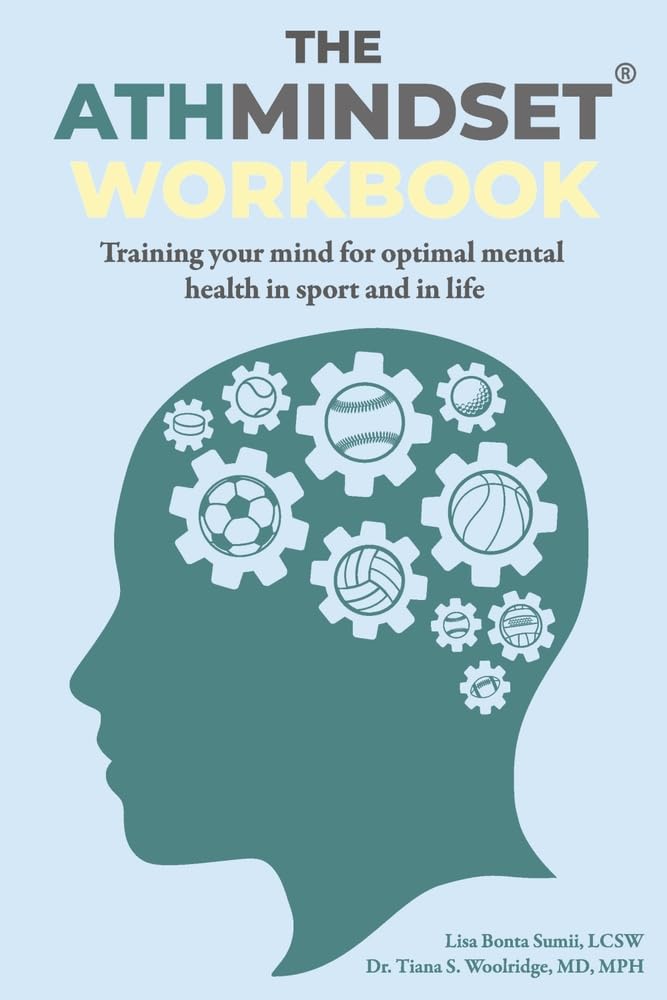
The ATHMINDSET Workbook: Training your mind for optimal mental health in sport and in life.
This workbook was created by Lisa Bonta Sumii, who is a Licensed Social Worker and Certified Mental Performance Consultant. I’m a huge fan of Lisa’s podcast Athlete Mindset.
What I love about this workbook is that it bridges the gap between mental health and mental performance in a way that very few resources do. So much of the sport psychology content out there focuses exclusively on performance optimization — getting in the zone, managing competition nerves, building confidence. Lisa’s workbook goes deeper than that. It addresses the whole athlete: their identity, their emotional wellbeing, their relationships, and their life beyond sport.
The format is incredibly accessible and practical. Rather than just reading about mental skills, athletes are actively guided through exercises and reflections that help them apply the concepts directly to their own experience. This makes it an ideal resource for athletes who want to do the inner work but aren’t sure where to start. The ATHMINDSET podcast and the workbook are full of gold nuggets for players, coaches, and parents supporting the mental performance and wellbeing of athletes and teams. I frequently recommend both to my athletes as companion resources to our work together.
Grit: The Power of Passion and Perseverance
In this #1 New York Times bestseller, psychologist Angela Duckworth makes the case that the secret to outstanding achievement is not talent but a special blend of passion and persistence she calls “grit.” Her research is groundbreaking, accessible, and directly applicable to the world of sport.
Duckworth’s research found that grit — the combination of passion and perseverance — is a stronger predictor of high achievement than intelligence, talent, or other personality traits. For athletes who have ever been told they aren’t talented enough, this book is the antidote.
The book includes Duckworth’s Grit Scale — a self- assessment that measures grit’s two key components: passion and perseverance. I use the Grit Scale assessment with my college teams at the start of the season as a powerful tool for self-awareness and team building. The conversations it sparks are always revealing. If you prefer to learn visually, Angela Duckworth’s TED Talk on grit has been viewed over 30 million times and is a great place to start before diving into the book.