
This is not your typical reading list of sport psychology books. At Headstrong Mindset, I want to start by acknowledging that there are a ton of fantastic books out there on mental toughness, navigating pressure, and overcoming mental obstacles for athletes in sports. The problem is that most of them are written by men about male professional athletes. As a former professional and collegiate athlete who has spent a lifetime competing and working in women’s sports, I don’t find most sport psychology books relatable to my athletic career.
[Read more…] about Must Read Sport Psychology Books for (Female) Athletes, Coaches & Teams
Core Values for Athletes and Coaches: Why They Matter and How to Find Yours
Why knowing what you stand for is the foundation of success in sport and life

Ask most elite athletes what their goals are and they’ll tell you without hesitation: earn or maintain a starting spot, win a conference title or championship, break a personal record, earn a scholarship or get drafted to go pro. Goals drive us and they matter. But ask those same athletes about their core values — what they stand for when no one is watching, what guides their decision-making and how they approach conflict-resolution among teammates or coaches when the pressure is on — and most will pause. Yet for athletes and coaches at every level, having clear core values is one of the most powerful and underutilized tools in sport.
That pause is telling.
[Read more…] about Core Values for Athletes and Coaches: Why They Matter and How to Find Yours
Team Cohesion in Sport: What It Is, Why It Matters, and How to Build It
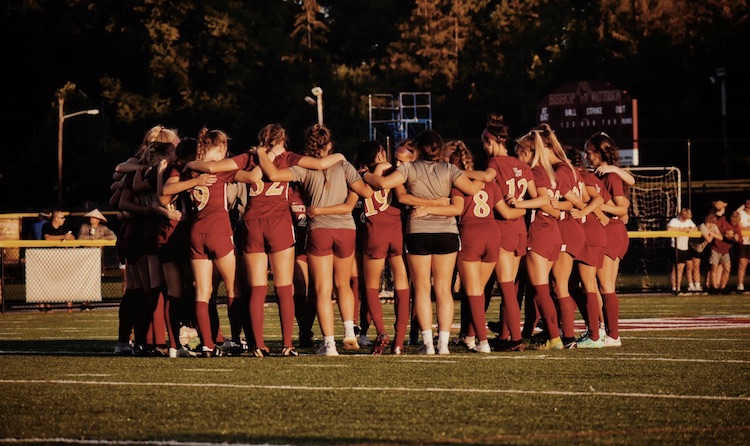
Every coach has experienced it: a roster full of talented athletes who, for whatever reason, just can’t seem to gel as a team. Conflicts simmer beneath the surface and go unresolved. Cliques form. Communication breaks down. And no matter how much talent is in the gym, the team consistently underperforms and falls short. What’s missing is team cohesion — and in sport, it’s the difference between a group of individuals and a genuine team.
They lack cohesion.
On the flip side, most coaches have also experienced the opposite — a team that maybe doesn’t have the most talented roster on paper, but competes with such unity, trust, and collective purpose that they consistently outperform expectations. Athletes communicate clearly. They hold each other accountable with compassion rather than criticism. They laugh together. They cry together. And when adversity hits — and it always does — they lean in rather than fall apart.
That’s what team cohesion feels like. And in my work as a mental performance consultant working with collegiate and elite athletic programs, building team cohesion is one of the most impactful things a coaching staff can invest in — because cohesion is what transforms a group of individual athletes into a genuine team.
Here’s what the research tells us about team cohesion in sport, what threatens it in today’s landscape, and how coaches can intentionally build it.
[Read more…] about Team Cohesion in Sport: What It Is, Why It Matters, and How to Build It
Gratitude in Sports: Benefits and 5 Exercises for Athletes
The impact of gratitude in sport is often overlooked by players and coaches. Gratitude is so much more than just a temporary feel-good emotion in response to counting your blessings. Gratitude has the potential to be a consistent character trait developed with intentionality over the course of a season or a lifetime.
The term gratitude comes from the Latin word “gratia” which means thankfulness or gratefulness. “The gratitude muscle is like any other muscle, in that it must be flexed periodically to remain strong”. The key takeaway here is that you can cultivate gratitude and become a more grateful person, athlete, and teammate by treating gratitude like a skill you train in your sport. In other words, the more you practice gratitude, the more naturally and consistently it will come to you.
[Read more…] about Gratitude in Sports: Benefits and 5 Exercises for Athletes
3 Key Reminders About Having a Growth Mindset
At Headstrong, we believe your mindset is the difference maker. Your mindset can either hurt or help your performance.
A fixed mindset focuses on how good you are right now instead of your potential. A fixed mindset takes feedback personally and gets defensive. A fixed mindset avoids working on your weakest skills and does not believe that improvement is possible. A growth mindset focuses on measuring improvement and learns from a tough loss. A growth mindset accepts feedback and views criticism as constructive. A growth mindset targets your weakest skills in training and truly believes improvement is the reward of a hard work ethic.
Having belief in your ability to improve with practice is essential to succeeding throughout your career. It is critical you trust in the potential of your ability to improve and your teammates ability to get better during the course of a season. Here’s 4 key reminders about having a growth mindset.
[Read more…] about 3 Key Reminders About Having a Growth Mindset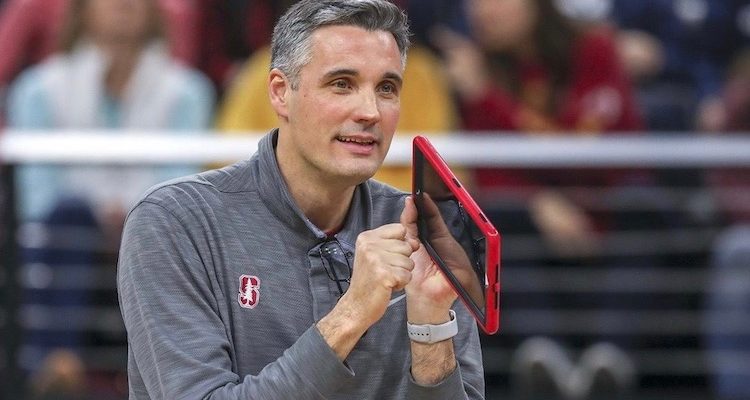
In the Huddle with Kevin Hambly, Stanford University Volleyball
After inheriting the program in 2017, Kevin Hambly led the Cardinal women’s volleyball program to back-to-back NCAA national titles. In 2018 he was named the Pac-12 and AVCA Pacific North Region Coach of the Year. Prior to taking the helm as the Director of Women’s Volleyball at Stanford, he was the head coach at Illinois for eight seasons, where he led the Fighting Illini to six NCAA regional appearances and the 2011 national championships.
[Read more…] about In the Huddle with Kevin Hambly, Stanford University Volleyball