
This is not your typical reading list of sport psychology books. At Headstrong Mindset, I want to start by acknowledging that there are a ton of fantastic books out there on mental toughness, navigating pressure, and overcoming mental obstacles for athletes in sports. The problem is that most of them are written by men about male professional athletes. As a former professional and collegiate athlete who has spent a lifetime competing and working in women’s sports, I don’t find most psychology books relatable.
[Read more…] about Must Read Sport Psychology Books for Athletes, Coaches & Teams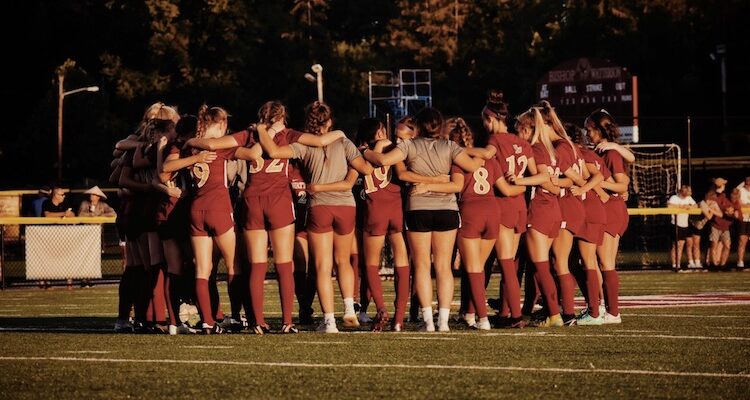
Breaking Down Team Cohesion
In sports team cohesion is the tendency for a group of athletes to remain united in pursuit of team goals in the face of adversity.
Carron & Hausenblas (1998) offer a conceptual framework for team cohesion that includes the environment (i.e., group size), leadership (both peer and coaching behavior), team (i.e., roles), and personal factors (i.e., satisfaction). This framework is based upon Carron’s (1985) two principles of group integration and the individual’s attractive to the group (Burke et al., 2014). The principle of group integration is the concept that each athlete has a unique perspective about the closeness or bondedness of the team (Burke et al., 2014). The concept of an individual’s attractive to the group reflects the athlete’s personal benefits of being on the team or how each athlete’s individual needs are being met by other team members throughout the course of a season (Burke et al., 2014).
[Read more…] about Breaking Down Team Cohesion
The Power of Gratitude in Sport
What is Gratitude?
The impact of gratitude in sport is often overlooked by players and coaches. Gratitude is so much more than just a temporary feel-good emotion in response to counting your blessings. Gratitude has the potential to be a consistent character trait developed with intentionality over the course of a season or a lifetime.
The term gratitude comes from the Latin word “gratia” which means thankfulness or gratefulness . “The gratitude muscle is like any other muscle, in that it must be flexed periodically to remain strong”. The key takeaway here is that you can cultivate gratitude and become a more grateful person, athlete, and teammate by treating gratitude like a skill you train in your sport. In other words, the more you practice gratitude, the more naturally and consistently it will come to you.
[Read more…] about The Power of Gratitude in Sport
3 Key Reminders About Having a Growth Mindset
At Headstrong, we believe your mindset is the difference maker. Your mindset can either hurt or help your performance.
A fixed mindset focuses on how good you are right now instead of your potential. A fixed mindset takes feedback personally and gets defensive. A fixed mindset avoids working on your weakest skills and does not believe that improvement is possible. A growth mindset focuses on measuring improvement and learns from a tough loss. A growth mindset accepts feedback and views criticism as constructive. A growth mindset targets your weakest skills in training and truly believes improvement is the reward of a hard work ethic.
Having belief in your ability to improve with practice is essential to succeeding throughout your career. It is critical you trust in the potential of your ability to improve and your teammates ability to get better during the course of a season. Here’s 4 key reminders about having a growth mindset.
[Read more…] about 3 Key Reminders About Having a Growth Mindset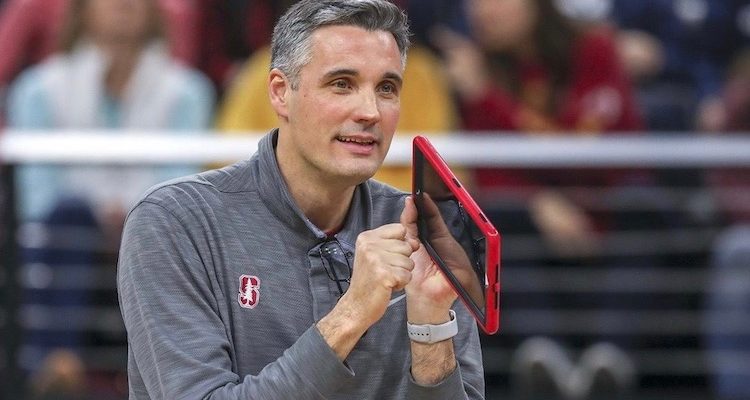
In the Huddle with Kevin Hambly, Stanford University Volleyball
After inheriting the program in 2017, Kevin Hambly led the Cardinal women’s volleyball program to back-to-back NCAA national titles. In 2018 he was named the Pac-12 and AVCA Pacific North Region Coach of the Year. Prior to taking the helm as the Director of Women’s Volleyball at Stanford, he was the head coach at Illinois for eight seasons, where he led the Fighting Illini to six NCAA regional appearances and the 2011 national championships.
[Read more…] about In the Huddle with Kevin Hambly, Stanford University Volleyball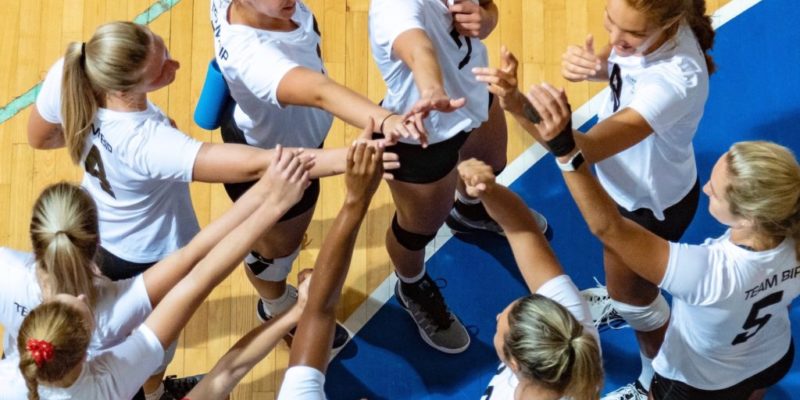
A Team Culture of Belonging vs Fitting In
There is a subtle but critical difference between a culture of belonging and fitting in. Creating a team culture of belonging is the key to melding a roster of over a dozen unique individuals into a single team with a shared sense of identity and purpose.
A culture of belonging starts with belief that every member of the team has an essential role to play. Finding and utilizing the unique assets of each player on your team will optimize your team’s potential. A culture of belonging celebrates each player’s uniqueness.
A fitting in culture on a team ostracizes players who are different than the majority and forces assimilation. Assimilation is the process in which a minority group comes to resemble or assume the values and behaviors of the dominant group. The consequence of assimilation is a loss of identity for the minority.
[Read more…] about A Team Culture of Belonging vs Fitting In